
How To Dye Wildflower Speckle Yarn on BRISTLE
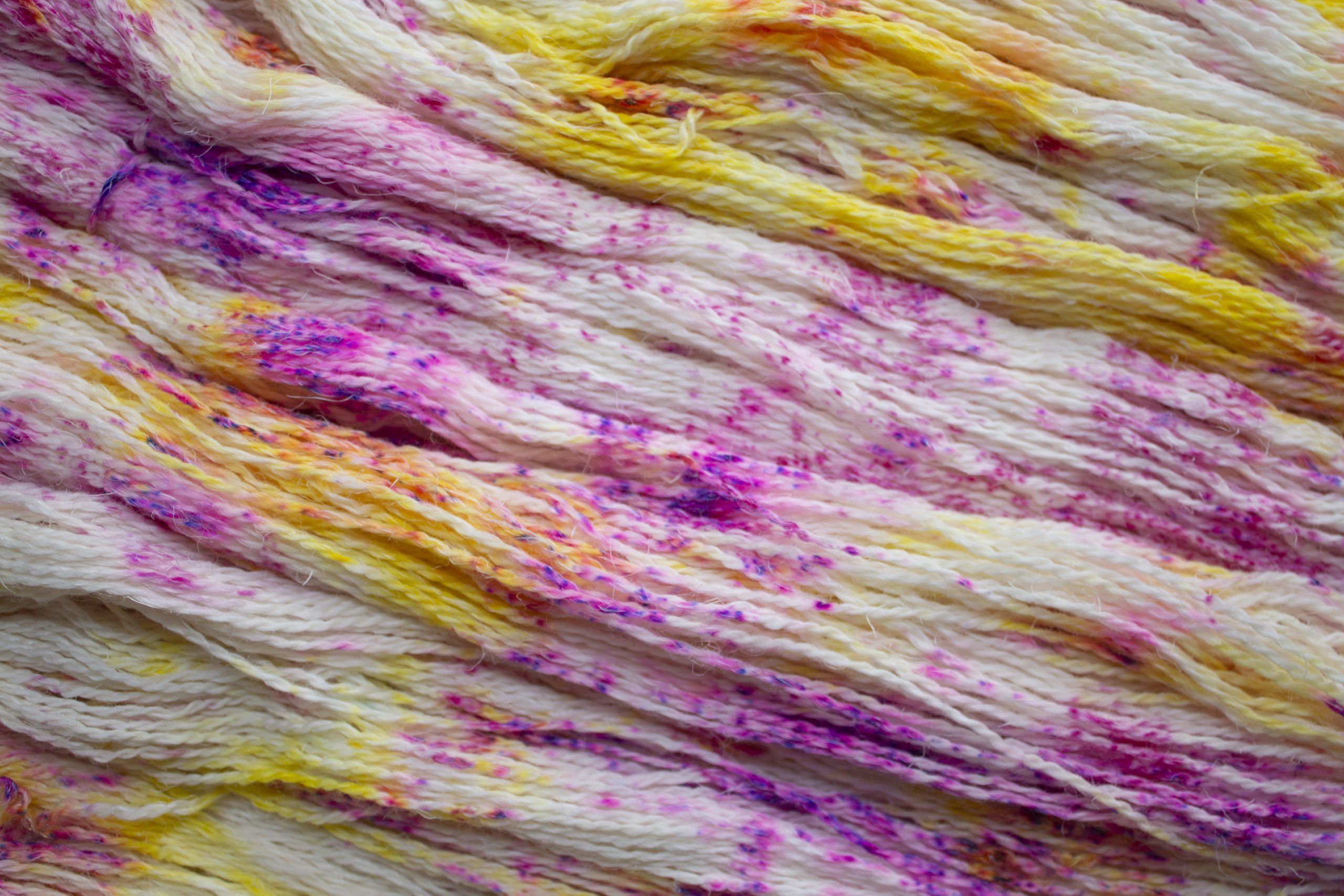
Summer is here and all the flowers are in full bloom! One of our favorite yarns for warm summer weather is Bristle. This unique blend of organic wool and hemp has a rustic appearance. The two ply structure really shows off the hemp content, which doesn’t absorb dye as quickly as wool. We wanted to dye this yarn a fun color reminiscent of wildflowers. With overlapping speckles of yellow, pink and purple, this yarn packs a sunny punch! Learn how to dye this yarn following our step by step tutorial below.
 Remove the skeins from the soaking liquid, gently squeezing the excess liquid out of the yarn. You want them to be damp, but not sopping wet. Place the three skeins side by side in the pan, pressing them down and spreading out the skeins so as much surface area as possible is exposed. Your yarn should look like the image above. Add 2 cups of the soaking liquid to the pan.
 Use a spoon to lightly sprinkle about one quarter of the Brilliant Yellow dye powder mix over the skeins. Go easy here and add it little by little. You can always add more, but it’s hard if not impossible to take away dye once you’ve added it to the yarn.
When you have enough speckles for your liking, cover the pan and heat for 5-10 minutes. Allow the yarn to cool for about 15 minutes.
Use a spoon to lightly sprinkle about one quarter of the Brilliant Yellow dye powder mix over the skeins. Go easy here and add it little by little. You can always add more, but it’s hard if not impossible to take away dye once you’ve added it to the yarn.
When you have enough speckles for your liking, cover the pan and heat for 5-10 minutes. Allow the yarn to cool for about 15 minutes.
 Use tongs to gently move the yarn around, flipping and turning the skeins to expose more of the bare yarn.
If the yarn seems a little dry to you, use a cup to add 1-2 cups of the soaking liquid to the pan.
Use the spoon to lightly sprinkle about half of the Orchid Pink dye powder mix over the skeins. Try to focus the powder on the bare areas of yarn.
Cover the pan and heat the yarn for 5-10 minutes. Remove the cover and allow the yarn to cool for 15 minutes.
Use tongs to gently move the yarn around, flipping and turning the skeins to expose more of the bare yarn.
If the yarn seems a little dry to you, use a cup to add 1-2 cups of the soaking liquid to the pan.
Use the spoon to lightly sprinkle about half of the Orchid Pink dye powder mix over the skeins. Try to focus the powder on the bare areas of yarn.
Cover the pan and heat the yarn for 5-10 minutes. Remove the cover and allow the yarn to cool for 15 minutes.
 Use the tongs to flip over the skeins to expose more white areas of yarn. Use the spoon to sprinkle the Purple Pop dye powder mix over the yarn, again focusing on the bare areas of yarn.
 Cover the pan and heat for 5-10 minutes.
Allow the yarn to cool completely.
Cover the pan and heat for 5-10 minutes.
Allow the yarn to cool completely.

MATERIALS
- 3 skeins of Knomad BRISTLE yarn – 70% fine organic merino wool, 30% hemp. We designed this project for BRISTLE, but it would work well on any of our yarns.
- Dharma Trading co dye for silk and wool. I used the colors ORCHID PINK, BRILLIANT YELLOW, and PURPLE POP.
- Gram scale
- 3 cups to mix the dye in
- Citric acid powder
- Metal chafing pan at least 3 inches deep – We need to dye in something with a lot of surface area in order to get nice speckles.
- A tablespoon
- Tongs
- Your regular set up for heat setting yarn
- Optional: 3 zip ties
SOAK THE YARN
Loop a zip tie around each skein of yarn, if you are using them. Soak the yarn in lukewarm water with a dash of citric acid for about 1 hour.MIX AND MEASURE THE DYE
Make sure to always protect yourself with gloves and a respirator whenever you work with dye in its powder form. A dust or surgical mask is not enough protection to safely work with dye powder! 1st CUP – 1 gram Brilliant Yellow + 1 Tablespoon citric acid powder 2nd CUP – 1 gram Orchid Pink + 1 Tablespoon citric acid powder 3rdCUP – 1 gram Purple Pop + 1 tablespoon citric acid powder Mix each cup well.DYE THE YARN
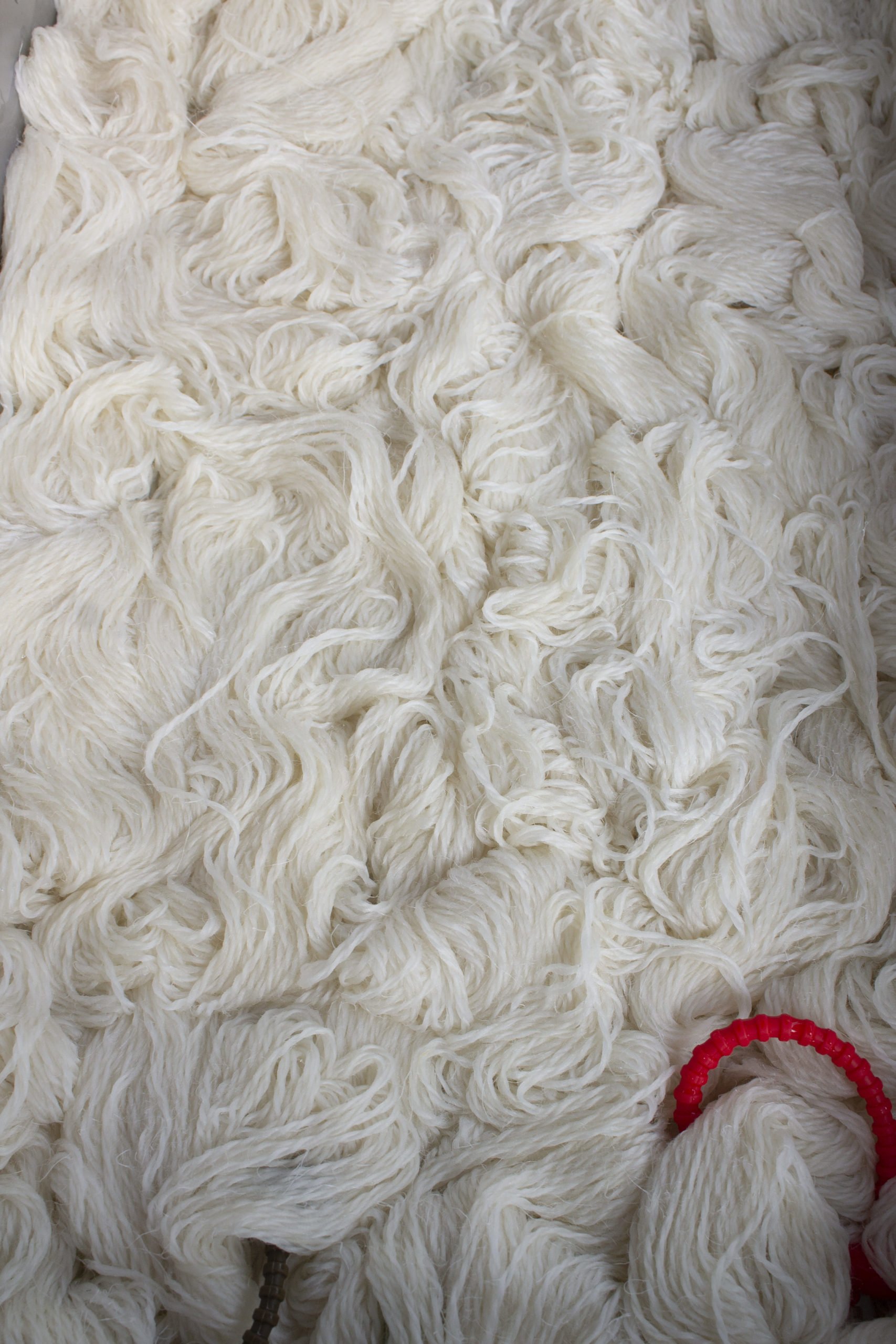 Remove the skeins from the soaking liquid, gently squeezing the excess liquid out of the yarn. You want them to be damp, but not sopping wet. Place the three skeins side by side in the pan, pressing them down and spreading out the skeins so as much surface area as possible is exposed. Your yarn should look like the image above. Add 2 cups of the soaking liquid to the pan.
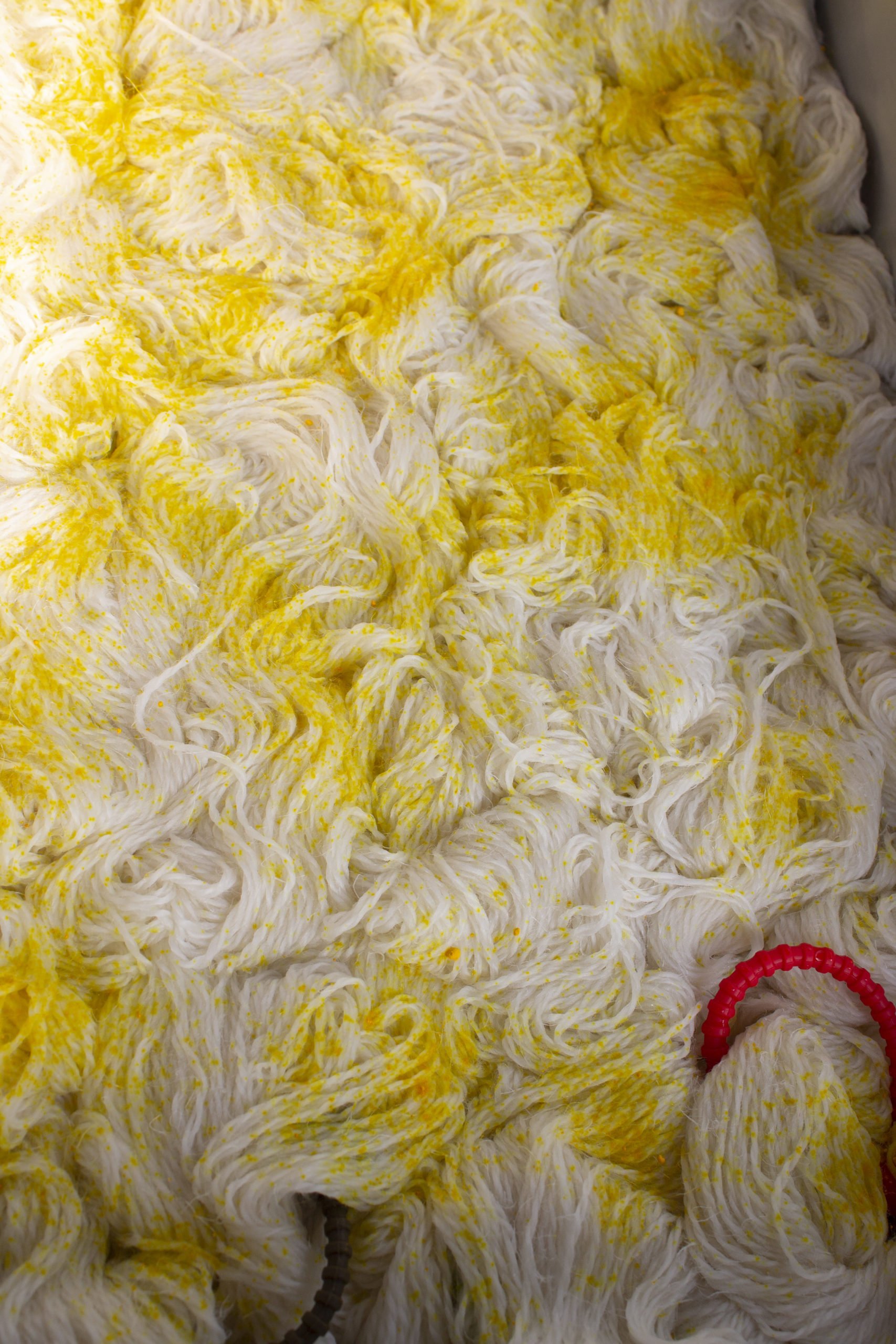 Use a spoon to lightly sprinkle about one quarter of the Brilliant Yellow dye powder mix over the skeins. Go easy here and add it little by little. You can always add more, but it’s hard if not impossible to take away dye once you’ve added it to the yarn.
When you have enough speckles for your liking, cover the pan and heat for 5-10 minutes. Allow the yarn to cool for about 15 minutes.
Use a spoon to lightly sprinkle about one quarter of the Brilliant Yellow dye powder mix over the skeins. Go easy here and add it little by little. You can always add more, but it’s hard if not impossible to take away dye once you’ve added it to the yarn.
When you have enough speckles for your liking, cover the pan and heat for 5-10 minutes. Allow the yarn to cool for about 15 minutes.
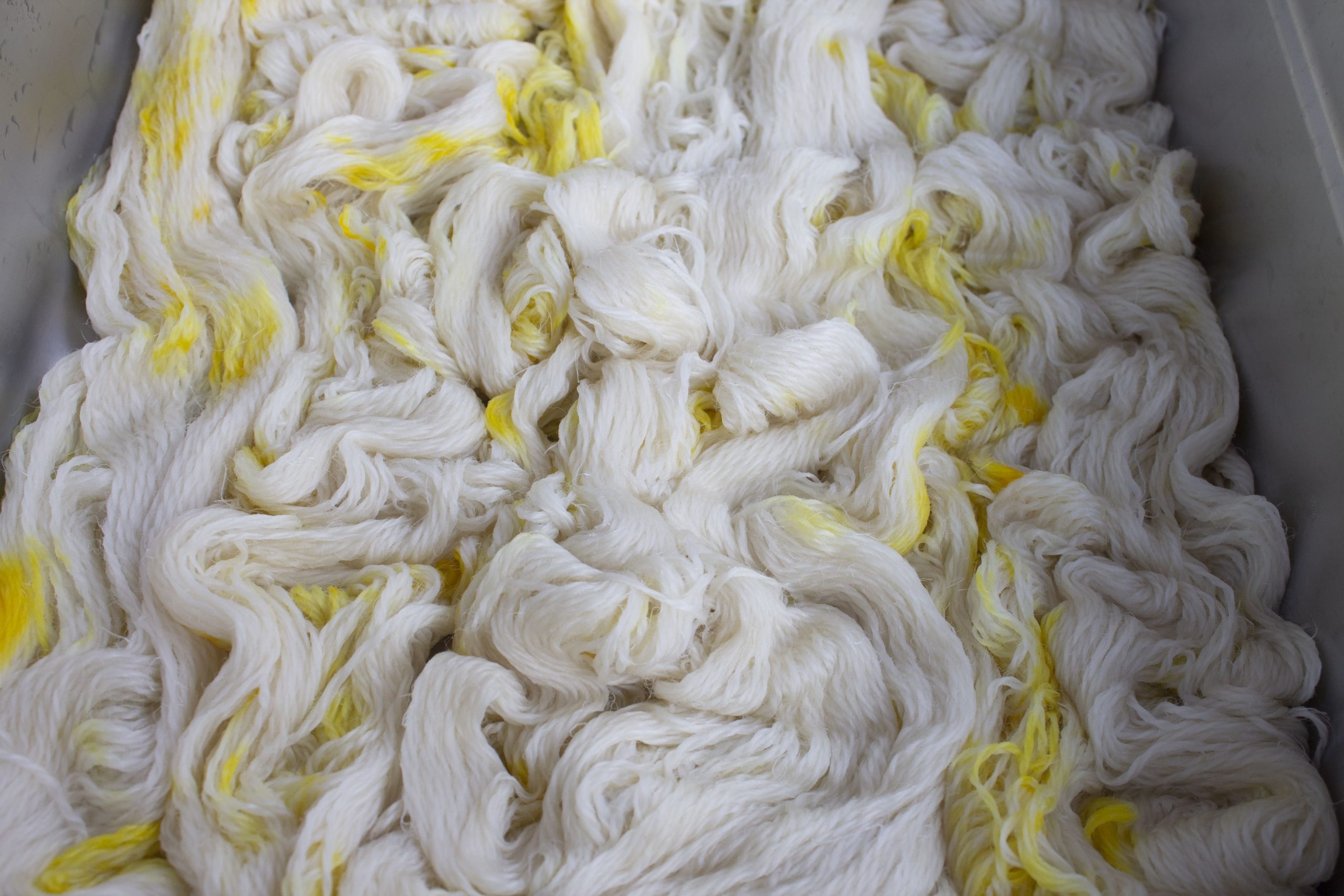 Use tongs to gently move the yarn around, flipping and turning the skeins to expose more of the bare yarn.
If the yarn seems a little dry to you, use a cup to add 1-2 cups of the soaking liquid to the pan.
Use the spoon to lightly sprinkle about half of the Orchid Pink dye powder mix over the skeins. Try to focus the powder on the bare areas of yarn.
Cover the pan and heat the yarn for 5-10 minutes. Remove the cover and allow the yarn to cool for 15 minutes.
Use tongs to gently move the yarn around, flipping and turning the skeins to expose more of the bare yarn.
If the yarn seems a little dry to you, use a cup to add 1-2 cups of the soaking liquid to the pan.
Use the spoon to lightly sprinkle about half of the Orchid Pink dye powder mix over the skeins. Try to focus the powder on the bare areas of yarn.
Cover the pan and heat the yarn for 5-10 minutes. Remove the cover and allow the yarn to cool for 15 minutes.
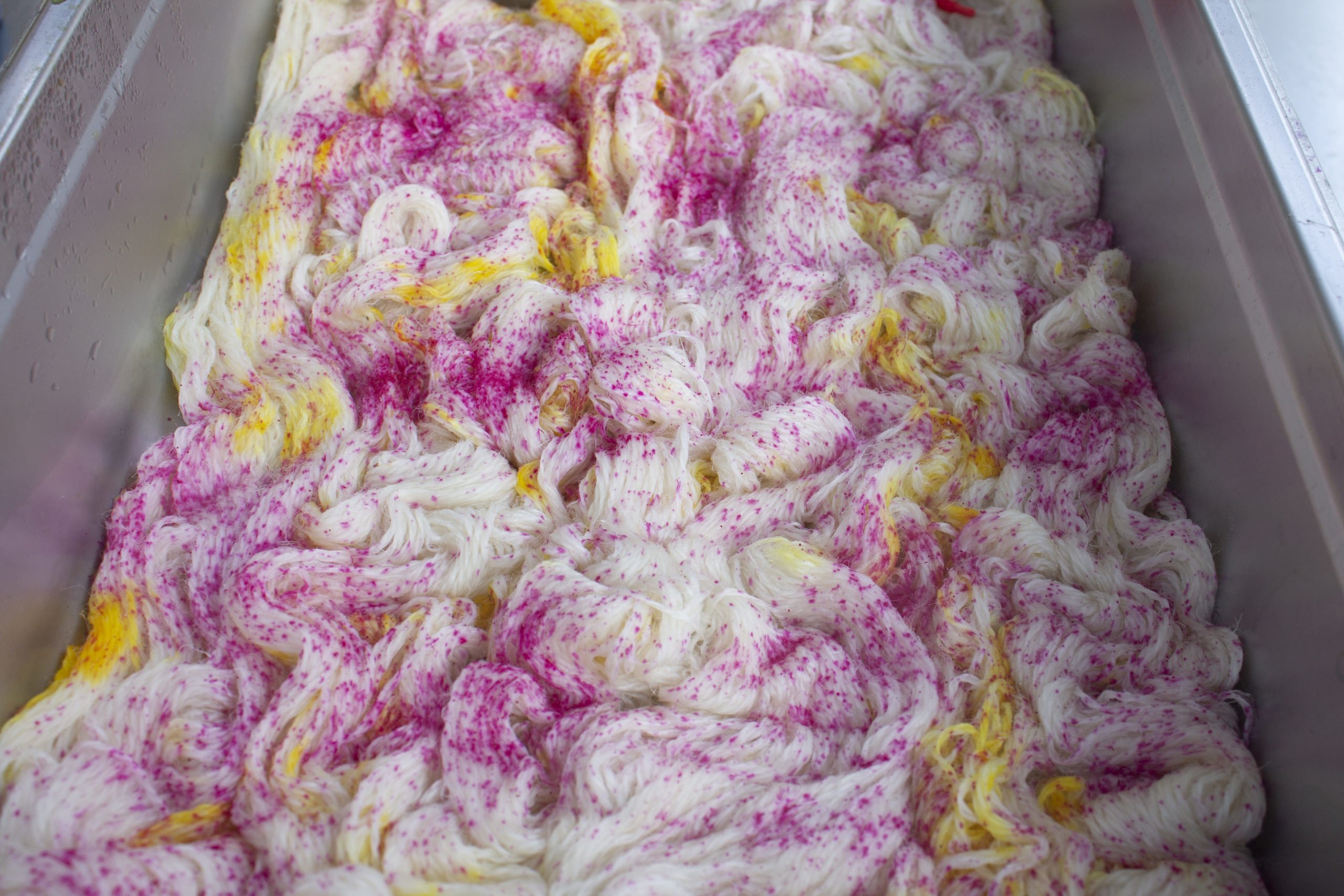 Use the tongs to flip over the skeins to expose more white areas of yarn. Use the spoon to sprinkle the Purple Pop dye powder mix over the yarn, again focusing on the bare areas of yarn.
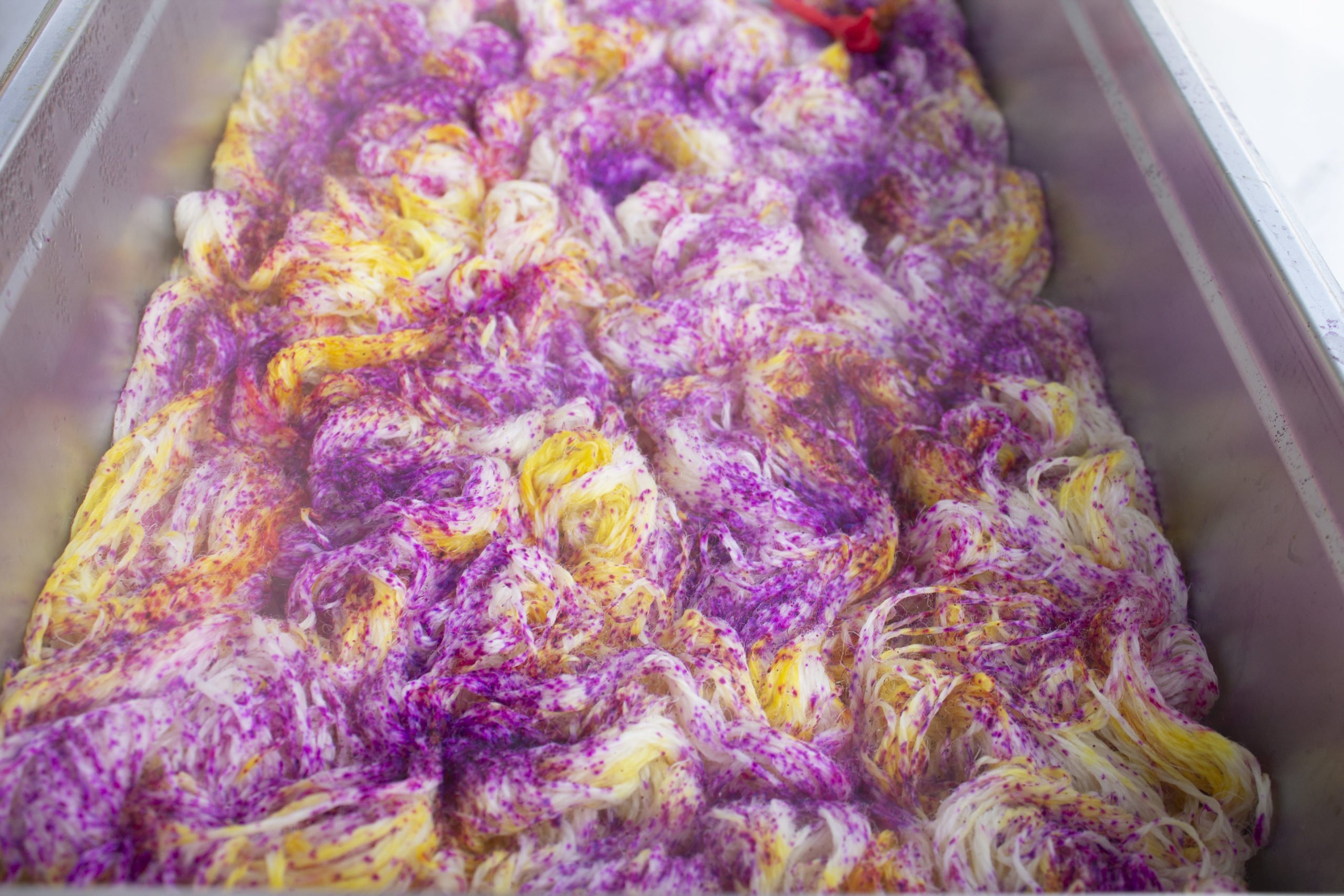 Cover the pan and heat for 5-10 minutes.
Allow the yarn to cool completely.
Cover the pan and heat for 5-10 minutes.
Allow the yarn to cool completely.
RINSE AND DRY
Rinse and dry the yarn as you normally would. Enjoy your finished yarn! Make sure to tag us using #Knomadyarn so we can see all your fabulous projects.